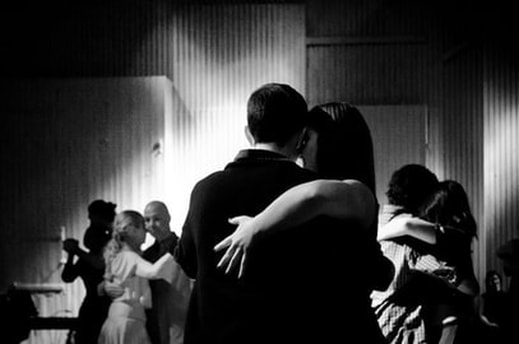
 Dear tango lovers, your instructors at El Encuentro Tango have thought about drafting a guide for you, tango dancer, to help you achieve that objective and desire that is at the heart of the reason why you are reading this very guide: becoming a great argentine tango dancer, one that is sought after on the social dance floor and most importantly, that receives great joy and happiness from the practice of this art. This guide is the fruit of more than 25 years of combined personal and professional experience, especially as students ourselves. It is designed for you in whom the tango passion is starting to grow and who would like to have a reference on how to make this journey the most pleasant and successful. If you are an absolute beginner, you might find this page more useful (link here). If you follow and reflect on the principles that are contained on this guide, we can guarantee you will go a long way in your tango journey and achieve what today might seem nearly impossible. Because this is what happened to us: tango is an essential part of our lives that contributes to make them worth living: we would therefore like to share with you what our journey has been and our tips - on how we got from beginners to madly in love with tango - with the hope to inspire you now and in the future to get lost in more and more beautiful tango embraces! Enjoy :) Part 1 -The right mindset - Don't give up, and you will succeed: Argentine Tango is one of the most beautiful dances and creations ever conceived by the human being, and also a difficult art and discipline that requires consistency, passion, commitment, grit, patience and the ability to navigate frustration. In our instant gratification societies, we are increasingly losing the capacity to stick to hard goals. Think of a great achievement in your life you are particularly proud of. Was it very easy to achieve or did it required a lot of work? Same goes for tango. If you like it, stick to it and don't give up. The rewards will be tremendous, and will have positive consequences that will reverberate and illuminate your path far beyond the dance itself. - Grit and frustration : We all had that one lesson when we thought we had unlocked the mystery of tango, to then understand a meager 30% of what the teacher said the following week. This is perfectly normal and also incredibly frustrating. The ability to not throw in the towel after such moments, is a big determinant in your long term capacity to learn tango - and not only tango. We have seen students starting with very little control over their bodies, who ended up a few years later as fantastic tango dancers. What did they had in common? Grit (=perseverance and passion in the pursuit of a goal). - Learning tango is not a linear process: Following on the above, tango is not a linear process. Sometimes we discover many new things in a short period of time, to then languish in our improvement some time after. But... This is only what is visible on the surface. In the background, there is another process taking place: our bodies, minds and muscles are constantly working, adjusting and fine-tuning what we are learning behind the curtains. When the right time comes, our efforts will be repayed and our improvements will blossom and become a sudden - and very rewarding - "a-ha" moment . There is an expression in Argentina and in tango to describe exactly this feeling: "me cayó la ficha" (the coin fell; I suddenly realized). Part 2 - How to learn and practice - Be active in the classes: Ask and inquire during the lessons. Without understanding the subject to the core, you will not learn it. It takes courage to ask questions, but just remember: everyone has questions but few dare to ask. Which group do you want to be part of? - Ego, humbleness and feedback: Don't let your ego prevent you from growing. Constructive feedbacks are part of the process, and we shouldn't take them personally. It is never a feedback on us as people, only on something we are learning. Separating consciously the two is important. Imagine if your instructor would tell you all the time that you do everything great... first, think about how likely it is, second: how will you know when it's really going to be great and what to stick to and what to eliminate? It takes a lot of effort to learn tango and it requires a lot of humbleness. Finally, feedbacks between peers should be constructive and positive, and we should always ask if the other person wants to receive it. In any case, if you are stuck with some movement, call your teachers: they will help you untangle it. - You will not learn to dance argentine tango only going to classes: this is a hard one to swallow for many, but we feel obliged to tell you the truth. If you only come to the courses, you will not learn to dance argentine tango in the way you desire, and your dance skills might remain at a superficial level. If we compare two people who have been dancing "for a year", it turns out that one spent 30 hours going to classes, and, during that time, the other spent several hundreds in classes and social dance floors. Believe us, it makes a difference. It is during milongas and practicas that we gain fluidity and grace, this is where we have real contact with our partner. Start attending milongas and practicas as soon as possible, even after your first class. This is why... - The practica is really the best time to learn, and we look forward to support you during it: starting from 30 January 2023, our practica(social dance/practice session, free for all enrolled students) will start one hour earlier, at 20.15, every Monday. Why? Because we think this is the most important time for your development in tango, so we want to make the necessary schedule changes for this to happen. The practica is a social dance event, but not only: it is a moment you can use to ask us all the questions you want and clarify all your doubts, on anything tango-related (we will treat Big-Bang and other life-related questions starting from September 2023, not yet ;)). This is a time to try things, to make mistakes and break patterns to find new ones. It is the time to dare and push the limits of what we believe we can do. All this is not always possible during a class. You don't need to come at our practica on Mondays if you can't for schedule reasons; make sure to attend one of the many practicas and tango events that take place during the week in Göteborg (at this link you can see the tango calendar of the city). We are very glad to even stay overtime, if this means that you learn more and get more out of it. If you are passionate and eager, we get excited and happy, it's that simple ;). Use this time wisely and we promise you loads of fun, and a faster highway into the tango olympus ;) - Our partners: respect, choosing the right one and changes : Look for the causes of mistakes first in yourself, focusing on finding who's guilty for the mistake will not push your development forward. On the contrary, it is fundamental to have a caring and collaborative approach towards your partner. Both of you are trying your best to make it work. Relaxation and accepting mistakes as a part of the learning process will make everything more enjoyable! You are there to have fun and learn, and this should come in first place. Consider choosing a partner at your level who wants to develop like you and put the same amount of training as you plan to do, and with whom you feel comfortable and safe; finally, try to change partners in the classes and social dance as often as you can. - Consider additional training: tango is a wonderful dance, but requires a minimum level of body control to start with. If you have serious problems with balance and control of your body, we really recommend you to consider additional training like pilates, yoga or anything that works with strengthening your body, core and balance. If you don't have any problems with the above, remember that any additional training like the above mentioned will still dramatically speed up your learning process. Part 3 - Choosing the right level and expectation vs reality - Choosing the right level: Choose the level of the course according to your real current skills, not on how many courses you have attended. If you have attended one course and then stopped for a year, and repeated the same pattern again (or any variation on the theme similar to this), you will probably gain more by going back down a level and refocusing on the basics than trying to learn things you're not yet well prepared for. Remember, humbleness: let's always keep in check the balance between our expectations and the current reality. Yes, our ego will not be very happy for this; but our hearts and tango learning will eventually thank us for this, when we will look back. Same goes If you have attended only courses and very little social dancing: even if the label of the course you want to attend says "advanced" (and you took several courses before this), most likely you are still not really prepared for it. Finally, if the teacher decides that you should be in a higher group, do not worry: you will be the first to know. - "Finally the mystery of tango will be solved at the advanced course!" (or...?) : there is a common pattern among some students who want to skip levels and jump directly to advanced courses. It seems like all the previous courses cover unnecessary stuff, and that the mystery of tango will finally be unlocked and prophetically revealed to them during the advanced course. Needless to say, this is a common and big mistake. All the courses are tailored to the individual students. This means that we know what you need and how to give it to you, regardless of the course you subscribed to, which is just a label. What course you subscribed to does not really matter. You will still learn a lot, regardless of which course you subscribed to- or found a spot in. Trust us on this, be patient and you will be rewarded with a faster and more solid learning experience. If you skip levels, your tango will always be built on a shaky foundation. - "I want to develop with dancers who already dance well" and other pitfalls: we hear this one quite often as well. Everyone wants to dance with someone better, the harsh truth is: those we desire to dance with also want to dance with someone better than them! It is pretty easy to solve this: get out there and go to milongas, practicas and dance as much as you can. You will soon be invited by good dancers as well, even more if they start to see you as a "regular". When it comes to classes and the slow and steady development, you need instead to choose someone at your level to develop with. - Stick to the basics and come back to them as often as possible. If you have serious problems with balance, walking, pivots, and all these instabilities result in a stiff embrace and dance, keep focusing on the basics. You can see all the most advanced dancers attending beginners courses. This is because they have understood the necessity to go back to developing and improving the core of their movement in tango. This is the real key to solve the mystery of tango. Sorry, no shortcuts ;) Part 4 - Etiquette - Personal hygiene: bodily smells are normal, especially after a long day out, so no big deal, we are humans. Make sure to bring some deodorant with you or to put some on before the class, and make sure to try to have a fresh breath as well. Even if our partners tolerate us during our not-so-bright days when it comes to personal fragrances, these are difficult to ignore and take away some of the pleasure of sharing an intimate dancing moment with another person. - Make sure to know the basic rules of the etiquette in tango: mirada, cabeceo and general etiquette on the dancefloor. In the beginning, we can have a hard time remembering everything, therefore: respect, compassion and care for others will always be more important than just remembering some rules. An elegant tanguero/a is a polite, warm, caring and respectful person. Very simply, a pleasant person to be around, not only to dance with. Tango is poetry, community, healthy addiction, unpredictability and surprise, passion, authenticity, mindfulness…in other words: life at its best. And we hope that by reading this guide, you can feel one step closer in the right direction to enter this world with confidence, having loads of fun with your fellow dancers! Did we forget something? Comment below and let us know your thoughts! We might add them to the guide. A warm tango embrace to you, El Encuentro Tango
0 Comments
Leave a Reply. |
Tango Lifestyle - Music, history, interviews, books, new trends & much more directly from the tango universe for us - tango junkies! Tango Lifestyle - Music, history, interviews, books, new trends & much more directly from the tango universe for us - tango junkies!
|
 RSS Feed